
Eight years ago, Lily and I found a killer deal on flights from Toronto to Tokyo on YYZDeals.com. We booked in haste and left the logistics for later. Very little research went into the trip beyond a few points of interest and the location of our stay, a room-sized apartment booked through Airbnb. To our surprise, we arrived during sakura season, with the cherry blossoms in peak bloom between late March and early April. That only dawned on me while riding the train from Narita Airport to Shibuya Station. I remember looking out the window at the scenery lit gold by the setting sun and seeing a blooming cherry blossom emerge from behind a low-rise building as the train passed through one of the first urban neighbourhoods beyond the airport.
Tokyo left us with very different impressions. Lily found it too formal, bound by unspoken rules, and overly conformist for relaxed travel. I found myself admiring much of that same order. The cleanliness, the quiet compliance, the sense that people understand the social contract without needing to be policed. It’s hard not to compare that to home, where Canadians talk about civic responsibility but are too timid to enforce social consequences for breaking basic norms such as littering or using transit seats as foot rests.
Food became a quiet point of tension. I’ve been a vegetarian most of my adult life. Lily hasn’t and isn’t. Although she had many options, she felt burdened researching restaurants that would also accommodate me. I never asked her to do this, but at the time I was experimenting with one meal a day and occasional multi-day fasts, so I was comfortable going long stretches without eating. I failed to account for the stress she felt trying to ensure I had a decent time.
To her credit, she found excellent spots: a pricey vegan restaurant specializing in clean versions of western fast food; T’s TanTan Ecute Ueno, a fully vegan ramen and sushi restaurant inside the fare zone at Ueno Station; and Coco Curry. Our general impression was that everyday Tokyo cuisine was significantly short on fibre. We quickly developed cravings for fruit, vegetables, and whole grains. The hearty stuff was either scarce or expensive. I remember paying the equivalent of ten Canadian dollars for four Fuji apples long past their prime, eight dollars for a small jar of peanut butter, and about the same for a loaf of whole wheat bread. Japan isn’t a bread culture, fine. But the shelves were not lacking in ultra-processed white bread, presented in the crunchiest cellophane bags. (Aside: did you know cellophane is derived from cellulose and is compostable and biodegradable?) Since that trip, Lily has advised anyone heading to Japan to pack fibre pills if they’d like to remain regular.
Early on, we discovered that convenience stores like Lawson sold roasted sweet potatoes. That became breakfast on several mornings.
I was also excited by the vending machines (and posed with them in a photo below)! I knew Japan had an extensive network, but I wasn’t prepared for the sheer quantity or variety of items on offer. Unironically, hot cans of coffee from a machine on a random street corner felt like a miracle. And as it does, all that coffee led to frequent visits to Tokyo’s many public washrooms, which were consistently clean and tidy. Toronto should take note because the standard of cleanliness in our municipal public washrooms is appalling. I was reminded of this while watching Wim Wenders’ Perfect Days, a surprisingly beautiful film given that it’s about a Tokyo public toilet cleaner.
We walked a lot. Often 20 to 25 kilometres in a day. Other times we took the rail network to places like Yokohama and Kawagoe. In Yokohama, we wandered Chinatown, visited Kuan Ti Miao Temple, circled the waterfront through Yamashita Park and Osanbashi Pier, passed through Cosmo World, and watched the Cosmo Clock 21 at blue hour before heading back to Shibuya. That night, we ate at a West African izakaya-style restaurant called Los Barbados, where the Japanese proprietor, who had lived extensively in West Africa, pounded cassava like it owed him money to make fufu behind the bar. (I later tried to replicate this at home with a food processor—do not attempt this!) In Kawagoe, we explored several temples and the tight streets lined by clay-walled warehouses; and later, met a young Jamaican expat who had moved to Tokyo with his business executive mother, only to feel stranded in an ethnically homogeneous country where he struggled socially and romantically.
In Tokyo proper, we visited a shrine in Yoyogi Park, walked past rows of sake barrels painted with bold characters, and stood before wooden prayer walls dense with handwritten wishes. We wandered through Shinjuku Gyoen National Garden, seeing its takes on traditional Japanese, British, and French landscaping conventions, before ending up at a packed Shake Shack. At some point, we walked to the State Guest House, Akasaka Palace, and later made our way to the Imperial Palace area, where people paddled rented boats around the outer moat beneath the cherry blossoms. We also explored the Imperial Palace East National Gardens.
Day 1: Yoyogi Park to the Imperial Palace


Day 2: Harajuku to Taito City


Day 3: Imperial Palace and East Gardens and Marunouchi


Day 4: Yokohama


Day 5: Shinjuku Gyoen National Garden to Tokyo SkyTree


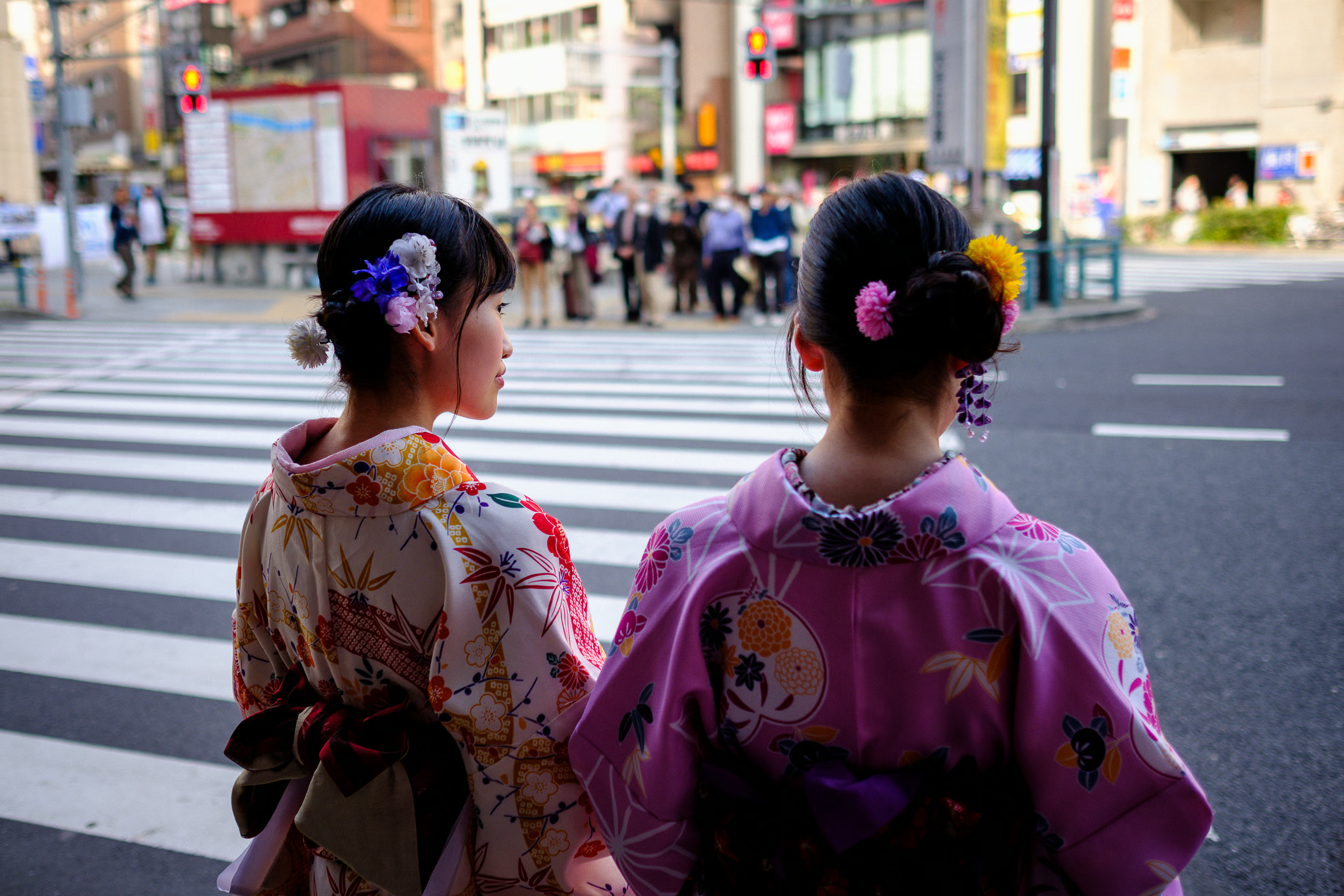


Day 6: Kawagoe


Day 7: Taito City and Tokyo National Museum


Day 8: A Short Stroll through Ginza
This was our departure day. We took the train to Tokyo Station, left our luggage with the bus that would drive us to Narita Airport, and strolled through Ginza and Hibiya for about one and one-half hours. The rush meant less time for leisurely photos and extensive walking.

